
Fly Tying Feathers
Last Update - Wednesday October 5th, 2021
"No Questions Asked" Return Policy
If you order feathers from me and are not happy for whatever reason, please contact me right away and I will resolve the problem. I don't want you to be unhappy with anything you purchase.
Thank you for your business. If you ever have any questions - call anytime. David 608-332-4220
Mixed colors, mixed sizes, 193 colors, 11 hook sizes...
Ordering & Payment Options
You can place orders on-line or over the phone. On-line, you can pay with PayPal. Don't have an account? You can use your credit card, just click "pay as a guest" or call in your order. International customers please visit; Ordering.
Fully stocked and shipping everyday - Check here for Updates!
2 December: Introducing Whiting's Catskill Classics line of dry fly! please visit; Catskill Classics
1December: Lots and lots of new stuff! Please visit; Whiting Dry Fly Saddles. and; Just In.
29 November: Spent the day adding Whiting High Grade Capes! Please visit; Whiting Dry Fly Capes.
28 November: Today I finally finnished up the Whiting Spey page. Please visit; Whiting Spey.
26 November: added lots of new stuff today! Take a look.... Please visit; Just In, Bargain Bin
16 November: Posted quite a few new items - moving fast! please visit; Variant
This week's Best Sellers!
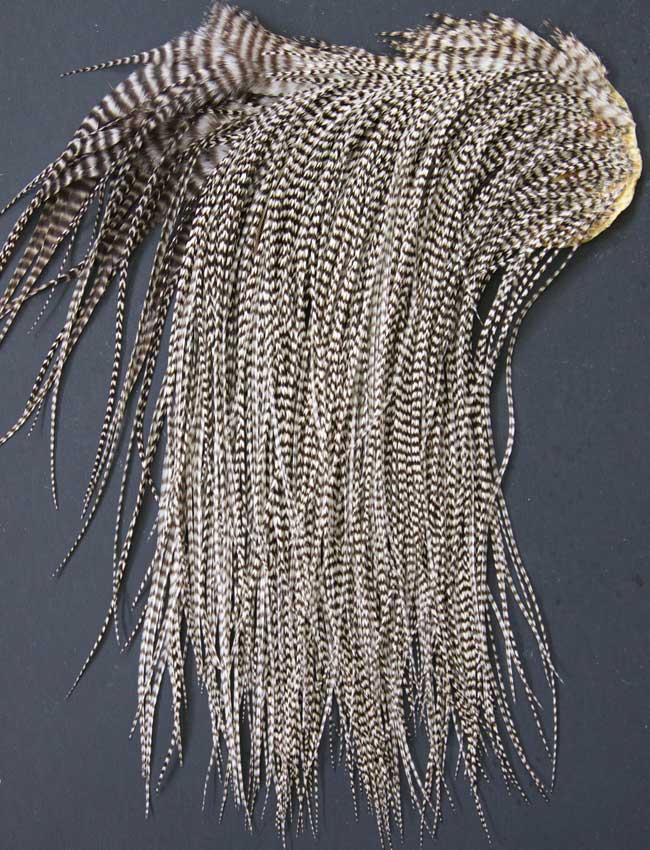
| Grizzly | $125 | |
 |
||
Winter is here, fishing is closed and it's time to get back to the tying bench! If you're looking to restock you've come to the right place. Visit my page on Whiting saddles: Whiting Show Saddles.
Hook sizes: mostly 18's and a few smaller. Feather length: as long as 11 to 13 inches. ***This is the exact Whiting saddle you will receive, and as always, on orders over $45, FREE SHIPPING! Whiting Dry Fly Saddle - $125
| ||
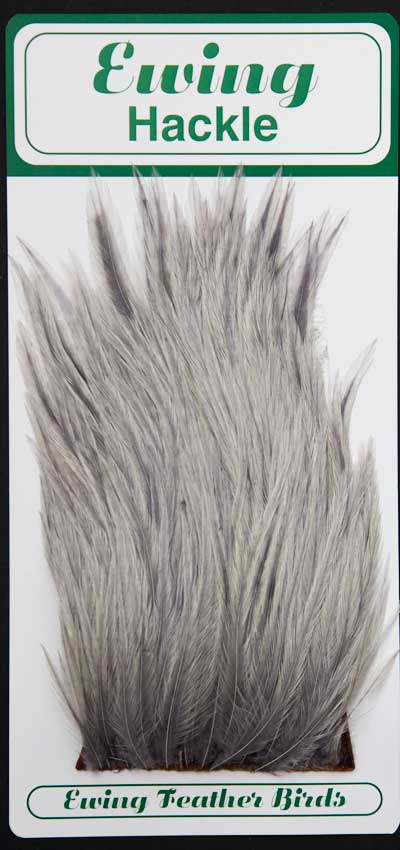
| Ewing Hackle | $29.99 | |
Here's what everyone wants - and we've got them in stocjk and ready to ship! Rooster Capes for dry fly and streamers. Rooster Saddles are the best feather on the market for flatwing patterns. Hen Capes are the softest you'll find for nymph patterns. Hen saddles have big wide webby feathers for game changers Bugger Packs have the nice tapered shape and enough web to give you fly action in the water. Deciever Pack, the feather everyone's ordering for tying the grey ghost, dyed dun. Order it here and it will ship today! To see all these and more, please visit my page; Ewing Hackle.
And as always, FREE SHIPPING
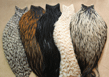
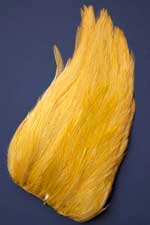
Ewing Deciever Patch - $29.99
| ||
|
|

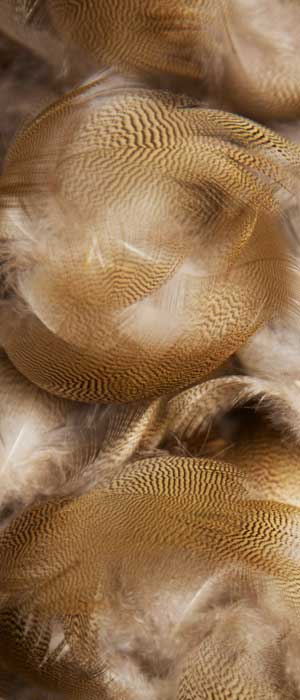
| Lemon Wood Duck | Out of Stock | |
Why use a sub when the real deal is available? Lemon Wood Duck has always been a staple for the fly tyer. However, these days it is in short supply and I've been getting calls daily for it. In packs of 15 feathers or by the 1/8 ounze pictured above, which by the way is a lot of feathers, It's in stock and ready to ship!
And as always, FREE SHIPPING
***Only Available to US customers!
| ||
|
|
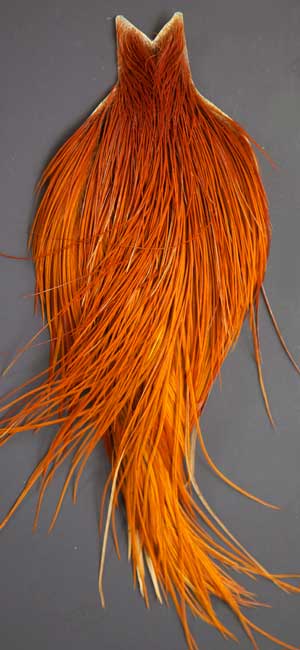
| Whiting Dry Fly Cape | $50 | |
A few years ago everyone was looking for a grizzly cape. Today it's brown. The reason? If you've been around long enough to remember the hair feather days, all the girls wanted grizzly feathers dyed bright colors in their hair. So all the growers swithched to raising grizzly. Now they're swithching back to raising brown. But it's going to take some time to catch up. The other reason capes are all the rage is size. Try and find a brown saddle that will tie a 10. Capes are the answer. Whiting Pro Grade and bronze Grade capes are also available, please visit my page; Whiting Dry Fly Show Capes.
And as always, FREE SHIPPING
| ||
|
|
Whiting Grizzly Hackle 25 & 100 Packs |
$17 & 7 | |
The beauty in 100 packs is that the feathers are sized and ready to go, all at an affordable price. Don't be one of those tyers who has a drawer full of capes with all the favorite sizes picked out. I'm also offering dark barred dark ginger at this price. If you would like that color, please visit; Bargain Bin.
And as always, FREE SHIPPING
Whiting Grizzly 25 Pack - $7
Whiting Grizzly 100 Pack - $17 | ||
| top |
My Top 5 Most Visited Pages...
Each week google tracking show me which pages visitors to my site are focused on most. Interested to see what everyone is looking at? Just click on any of these links:
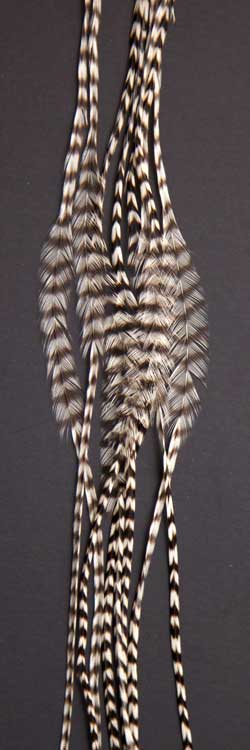
 Dry Fly Hackle - I've completley redesigned this page, offering a side by side comaprison of dry fly hackle from each of the major hackle growers, all on one page. From Whiting Gold capes to Indian capes, be sure and check out my page; Dry Fly Hackle.
 Feathers for tying Soft Hackle Flies - Subsurface feeding accounts for 90% of a trouts diet. From hen capes to partridge, to starling and grouse, these are beautiful feathers. Enough said, lets take a look at some of the feathers you will want in your arsenal; Soft Hackle
 Whiting Soft Hackle with Chickabou - Today, these are the hottest feathers on the market. This page lists every line and color offered by Whiting. From the ever popular Brahma for the "brahma bugger" to Spey, you'll find them all here; Whiting Soft Hackle with Chicabou.
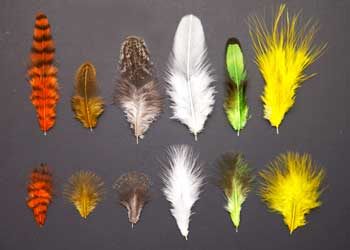
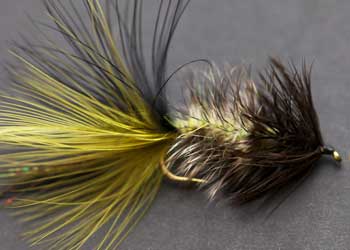 Woolly Bugger Hackle - A simple yet deadly pattern, finding just he right feather for tying your bugger patterns is more complicated than you think. Do you want soft or stiff fibers? Long stems? Rooster or hen feathers? Cape or saddle? It all depends on the waters you will be fishing.To see all the choices, please visit; Wooly Bugger Hackle.
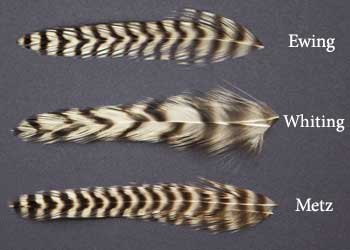 Feathers for tying Streamers - There are more feathers listed on this page than any other. I've tried to cover all the basics and then some. From wings to shoulders, throats, bellies, and cheeks - you'll find feathers for them all here; Streamer Feathers.
 Darbee Duns - Harry Darbee was a pioneer in the development of genetic hackle. The focus of his breeding was dun, every shade of dun. The feather quality was like no other. Stiff barbs, flexible stems, and beautiful colors. Today, a small flock has been preserved, take a look; Darbee Duns.
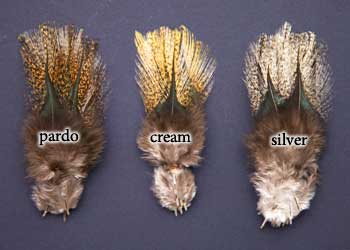 Coq de Leon - Dating back to 1624, Coq de Leon, or the "rooster of Leon" is the oldest line of birds bred for their feathers. The beautiful long speckled fibers are stiff, almost having a glassy look. From tailing packs to streamer feathers, you'll find them all here; Coq de Leon.
With so many feathers and links on this page, it's hard to know where to start. And it's easy to get lost. So to get a quick glimpse of all the pages on this site, here is a link to the Product Directory.
| top |
Today's Hackle Growers
Hackle quality has come a long way from the days of Harry Darbee and Henry Hoffman. Today's growers might have begun with those genetics, but over time, through selecting for unique qualities, each grower has made them their own.
 Selecting the Best Feathers for Fly Tying
Comparing Dry Fly Hackle - coming soon!
What is the best dry fly hackle on the market? And more importantly, what makes it the best? Well this page compares hackle from all the different growers including Collins, Keough, Metz, Whiting, and more.
Included is a price comparison to see which brand is the best value!!
Far and away the largest producer of genetic hackle today, Whiting Farms covers every need out there. Dr Whiting aquired the Hoffman and Hebert Miner lines back in the late 80's and continues to improve on their initial work. Today the dry fly is exceptional. The feather count, barb density, symetry, flexable stems, of Whiting products has changed the world of fly tying. The Whiting line is extensive, please visit; Whiting Farms

Metz hackle, now owned and operated by Umpqua is the hackle that set the standard back in the 70's and 80's. Today, thanks to Rick Dailey, it is now making a phenomenal comeback. The stems are flexable, the barbs are stiff and the count is high. All deserving of a second look; please visit; Metz Feather Merchants.
Keough Hackles offers an exceptional grade of hackle at an affordable price. The feathers have flexible stems, a high barb density, and stiff barbs. "Masters Tyer's Grade" is Keough's highest grade. Second is his "Tyer's Grade". Both are an excellent value and you can be assured that you will tie the maximum number of flies for the least amount of money. For those of you who have yet to tie with one, you should try them out; please visit; Keough Hackles.
Ewing's line of feather birds produces some of the finest feathers for tying streamer and deceiver patterns.
The feathers are beautiful and the shape is perfect. For 20 years he has worked with these birds to produce some of the finest hackle; please visit; Ewing Feather Birds.
| top |
Just getting started? Here are a few suggestions...
If you're new to fly tying and need a few suggestions , my "crack staff of experts" has put together a "must have" list for each of the following catagories of flies, click on any of these thumbnail links:
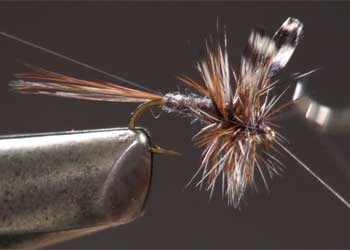
Feathers for tying Trout Flies
Simple and elegant, Spey flies are a favorite among many tiers. The patterns are fun to tie, that is if you have good feathers. Here you will find only the finest feathers, listed in the order - body hackle, feathers for throats, and wings.
Here are some suggestions for feathers that are used in tying trout flies. This page is divide into the following types of trout flies. Click on one of these links:
Each of these catagories has links to a "must have " list of feathers for tying most patterns. And as always, if you have any questions, please call!
Feathers for tying Dry Flies In tying dry flies, the hope is to imitate as closley as possible the adult stage of the mayfly. After the hatch, they mate, lay their eggs. The spinner you see on the waters surface is the final stage in the life cycle. |
|
Links
To tie a good dry fly you'll need hackle with stiff barbs and a strong flexible stem. These capes tie everthing from an #8 to a #28 come in a wide selection of colors to immitate any fly you'll see out on the stream. Wings on a dry fly should be small webby feathers with rounded tips to give your fly a realistic silhouette on the water. Todays hen capes are too pointy and dry fly like. These feathers solve that problem. This is by far the best tailing material for tying dry flies. The barbs are long and stiff, supporting your fly on the waters surface. The speckling on each barb gives the tail a true buggy appearance.
As every fly tyer knows, there is something magical about how the light reflects off peacock herl when it's in the water. Trout find it irrisistable so it's no surprise it is found in so many fly recipies.
|
Harry Darby and Andy Miner bred the finest feathers for tying the quill gordon, blue quill, and blue wing olives. These catskill style patterns are every bit as effective today, and thanks to one breeder, so are the feathers.
These delicutly barred flank feathers make beautiful wings on such flies as the hendicksons and the drake. Some use dyed mallard as a sub, but as you'll see, there's nothing like the real thing. Another style of tying in wings is to use duck quills. The picture is of a no hackle bwo. Another popular fly is the royal coachman, seen in the picture on the left, with it's stunning white quills tyed in as wings.
Another style of tying in wings is to use duck quills. The picture is of a no hackle bwo. Another popular fly is the royal coachman with it's stunning white quills tyed in as wings |


| top |
Soft Hackle for tying Nymphs & Flymphs Subsurface feeding accounts for 90% of a trouts diet. Enough said, so lets take a look at some of the feathers you will want in your arsenal! |
|
Links
|
Hen feathers offer a wide range of colors and fiber lengths for tying wingless wet flies. This also includes coq de leon hen and brahma hen. The feathers are soft and webby, able to soak up water so that your fly sinks and stays under water. A well marked pheasant tail is a must have. The fibers make great bodies, leggs, and tails and their movement in the water gives the nymph a natural appearance. It's the only feather used in the pheasant tail nymph pattern. The brown and tan mottled apearance of feathers on the back of a grouse creates a nice effect on soft hackled nymphs and make them very good feather to have in your tying arsenal.
The woodcock feather is one of the softest feathers for hackling soft-hackle collars, perfect for fishing in clear still waters. The movement is subtle and the mottled color closely resembles the naturals. Peacock herl has an irredecent quaility that fish find irresistable. Uses include tailing or body material such as in the Zug Bug as well as wingcases like in the Gold Ribbed Hare's Ear The very small grey and dunn colored feathers on the top and underside of a mallard wing are extreemly webby and are perfect for tying PMD of BWO patterns that immitate the wings of emerging mayflies. Try teal wings for small flies. |
If you're going to tie soft hackles, a good partridge skin should be first on your list. The feathers do a remarkable job of giving the impression of an insect's leg segmentation. Feathers range in color from grey to tan to mottled brown. Even though these are rooster saddles, they are bred to be used for tying soft hackle flies. The fibers are soft and there is a lot of webbing in the feathers. They are great for tying wooly buggers! Starling is a very useful feather for tying small nymphs. Starling and purple is an easy fly to tie and very effective. Feathers range in color from dunn to beattle green with tan tips alowing for many interesting patterns.
Quail feathers are perfect for hackling small flies and are a blend of tan, brown, white, and grey with a distict mottled appearance. Bobwhites are nice but be sure and check out the other species that I've listed.
Biots can be used for wings such as on the prince nymph. Another use is a body material. When used to imitate the abdomen, the biots ridge suggests segmentation similar to the naturals.
Long wide webby well marked feathers are the hallmark of a good matuka feather. These feathers are solid web - right to the very tip. Give them a try, they are a very effective fly.
|
||||
| top | |||||


 Quail
Quail
Feathers for Wets Winged wet flies are my favorites. They are simple and elegant. They are fun to tie, they look good all lined up in a fly box, and best is that they catch fish. In this section I've listed some of the "must have" materials you'll need, and a picture of a fly showing how they are used. |
|
Links
The white wing on a "Royal Coachman" is tyed with duck quill. And as you'll see on some of the flies that follow, duck quills are dyed to just about evey color you can imagine.
The "Catskill" uses gadwall for both it's wing and tail. Just about any other duck flank such as teal, mallard, or pintail can be used in the same way, each having it's own unique size and color.
Goose shoulder marries well and is easily dyed to many colors, as seen here in the "Silver Doctor". The fibers are long enough to tie a larger wing and strong enough to hold their shape. The "Abby" is just one of countless patterns that use the tippets from golden pheasant for tailing material. But there are many other feathers on this bird that you can use in tying wets. The red on the breast makes striking throats and tails. The irredescent blue on the secondary wing quills make for a striking wing. The "Butcher" uses mallard, but don't be afraid to experiment with other colors found on the different breeds of ducks. "Tomah Joe" show season is just around the corner! As with every year, I will have the same wide selection, plenty to pick through, and off course, a few new offerings to grab your attention Almost every feather on a peacock has a use in tying wet flies; swords for tailing as in the "Cassin" fly; herl for bodies; blue neck feathers for throats; and mottled wing quills for winging. Did I miss anything?
|
The "Brandreth" pictured here is a good example of how hen saddles can be used for throats and tails. The colors are bright and the thicker fibers give the fly a nice look. Oak Turkey is used on many patterns as a winging material. It is available in light, medium, and dark shades. Here in the "Governor" the mottling is on the dark side.
"Greenwells Glory" is one of the most commonly fished flies in England. The collar on this fly is a greenwell hen cape - dark center with ginger edges. The saddles have a heavier fiber and make nice full throats.
Adding a junglecock eye to a fly seems to finish the fly and sets it off. Check out the "Telephone Box", the black of the junglecock against the white duck quill really ties the colors of the fly together.
The wing on the "Fish Hawk" here is tyed with hen pheasant wing quills. The fibers are shorter than turkey but the delicate brown and tan mottling makes for a nice effect. The "Beauty" is an elegant fly that uses guinea wing quills for the wing and tail. Smaller body feathers, both natural and dyed, are nice for throats. Make sure to check out the color difference in some of the other breeds.
|
||||
| top | |||||

Streamer Feathers Here are a few suggestions to get you started. I have a great selection of different feathers and color patterns so that you can tie just about any pattern. To see my complete selection of these feathers, please visit my page on Streamer Feathers. |
|
Links
These are wide, webby, stiff feathers that hold there shape. Great for saltwater streamers, they are a large feather that will hold it's shape. The streamer in the picture is an old pattern and uses golden pheasant crest as a wing. There are so many uses for just about every feather on this bird, having a whole skin is a must. Peacock herl is used in tying endless patterns. Whether it be used for tailing, body, winging, or any other use you can think of, it makes for a great fly. Take a look at the half moon feathers, they make nice cheeks. Long wide webby well marked feathers are the hallmark of a good matuka feather. These feathers are solid web - right to the very tip. Give them a try, they are a very effective fly.
|
The grey ghost is a great example of how silver pheasant can finish off a fly. Check out the dyed colors - they make nice throats.
Another great Whiting product, these feathers are more suited for fresh water streamer patterns. The stem is not as thick giving your fly more movement in the water For nice throat, tails, or cheaks on streamer patterns, teal, gadwall, or wigeon are a must have. Dyed, the barring eally stands out. And be sure to check out the exotic species too!
Tied in as a tail on a wooly bugger, the marabou breathes life into the fly. The long soft fibers can also be used to wrap incredibaly life-like fly bodies. Another popular use for marabou is to tie it in as a wing on a streamer pattern. The fluid motion in the water in unmatched by any new fangled sythetic! |
||||
| top | |||||



Feathers for tying Terrestrial Patterns By the time summer rolls around it's time to pull out a grasshopper or two and see if that might get the trouts attention. Beetles and ants can also prove to be some deadly patterns and here are a few feather suggestions to get you on the right track. |
|
Links
Trout love ants, and with a black cape you can tie tons of ants, black caddis, and beetles just to name a few. Soft hackle rooster saddles are also useful for tying terrestrial patterns. The fibers are not as stiff as dry fly and have more movement in the water. The long fibers on a pheasant tail feather are perfect for imitating the legs on many terrestrials such as grasshoppers and crane flies. Tying knots for leg joints gives it a natural look.
This nice little caddis fly pattern uses mottled turkey for its wings. Grasshopper patterns are another example of how the interesting color pattern on this feather can imitate the natural.
|
The wings on a Spruce moth or fly are tyed with feather tip of a silver badger hen cape. Hen feathers come in so many colors, are soft, and can be used for tails, collars, or palmered over the body of the fly.
Teal can be used for small tails or throats on your fly. Its delicite barring also gives the impression of leg segmentation. Other species of duck work well too, so be sure to check them out.
|
||||
| top | |||||


Feathers for tying warmwater flies Subsurface feeding accounts for 90% of a trouts diet. Enough said, so lets take a look at some of the feathers you will want in your arsenal! |
|
Here are some suggestions for feathers that are used in warmwater flies. This page is divide into the following types of flies. Click on one of these links:
Bluegill & Crappie | Bassbugs & Poppers | Pike & Muskie
Each of these catagories has links to a "must have " list of feathers for tying most patterns. And as always, if you have any questions, please call!
Feathers for tying Bluegill & Crappie Flies Fly Fishing show season is just around the corner! As with every year, I will have the same wide selection, plenty to pick through, and off course, a few new offerings to grab your attention |
|
Links
Fly Fishing show season is just around the corner! As with every year, I will have the same wide selection, plenty to pick through, and off course, a few new offerings to grab your attention.
Fly Fishing show season is just around the corner! As with every year, I will have the same wide selection, plenty to pick through, and off course, a few new offerings to grab your attention
Fly Fishing show season is just around the corner! As with every year, I will have the same wide selection, plenty to pick through, and off course, a few new offerings to grab your attention.
|
Fly Fishing show season is just around the corner! As with every year, I will have the same wide selection, plenty to pick through, and off course, a few new offerings to grab your attention.
Fly Fishing show season is just around the corner! As with every year, I will have the same wide selection, plenty to pick through, and off course, a few new offerings to grab your attention
This line of hen has a nice wide webby feather. Their size, shape, and wide assortment of colors make these perfect for tying warmwater flies such as poppers or collars on steelhead patterns
|

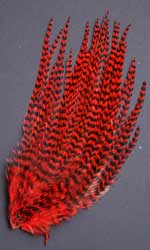 Ewing Buggar Packs and Deciever Patches
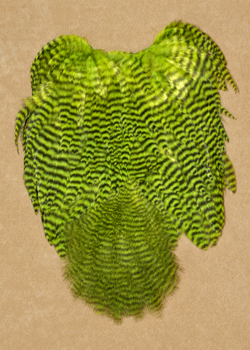 Chicabou
Bass Bugs & Poppers Feathers Fly Fishing show season is just around the corner! As with every year, I will have the same wide selection, plenty to pick through, and off course, a few new offerings to grab your attention |
|
Links
|
This line of hen has a nice wide webby feather. Their size, shape, and wide assortment of colors make these perfect for tying warmwater flies such as poppers or collars on steelhead patterns
Ewing's line of feather birds produces some of the finest feathers for tying saltwater and deceiver patterns. The feathers are beautiful and the shape is perfect. For 20 years Doug has worked with these birds to produce some of the finest hackle.
These fly fishing feathers are wide and webby and come in just about every bright color dyed on white or grizzly. For pattern that include natural colors, you'll find those too. Check out bleached grizzly - that's a hot one!
|
Marabou is found on the lower end of your Thanksgiving turkey. It is plucked, "bailed", sent to China to be dyed and strung, then sent back here to be tied into beautiful but deadly saltwater flies!
Fly Fishing show season is just around the corner! As with every year, I will have the same wide selection, plenty to pick through, and off course, a few new offerings to grab your attention
Fly Fishing show season is just around the corner! As with every year, I will have the same wide selection, plenty to pick through, and off course, a few new offerings to grab your attention.
|

 Ewing Deciever Patches
Feathers for tying Pike & Muskie Flies Fly Fishing show season is just around the corner! As with every year, I will have the same wide selection, plenty to pick through, and off course, a few new offerings to grab your attention |
|
Links
These are absolutley the finest feathers for tying Muskie flies. The long wide webby feathers have a flexible stem that gives your fly the real life movement in the water.
Ewing's line of feather birds produces some of the finest feathers for tying saltwater and deceiver patterns. The feathers are beautiful and the shape is perfect. For 20 years Doug has worked with these birds to produce some of the finest hackle.
For you flat wing fly fanatics you'll find every color imaginable and maybe even a couple more. If you are looking for feathers for fly tying, check these out!
Peacock herl is used in tying endless patterns. Whether it be used for tailing, body, winging, or any other use you can think of, it makes for a great fly. Take a look at the half moon feathers, they make nice cheeks.
|
Fly Fishing show season is just around the corner! As with every year, I will have the same wide selection, plenty to pick through, and off course, a few new offerings to grab your attention.
These feathes are found on a rooster just before the tail feathers. Some people mistake them for tail feathers because they are long and usually flow up over the tail. However, unlike the tail, they are softer and the stem is more flexable.
Marabou is found on the lower end of your Thanksgiving turkey. It is plucked, "bailed", sent to China to be dyed and strung, then sent back here to be tied into beautiful but deadly saltwater flies!
A bit of a departure from feathers, these tails have beautiful long fibers, far nicer than any bucktail you'll ever use. The interesting hairs on these tails are the ones that are a combination of black and white, and not to worry they are tanned, so most of the smell is gone!
|
 Whitng Muskie Packs - coming soon!

Feathers for tying Saltwater Flies Here is a list of the best selling feathers for tying saltwater patterns. The rooster feathers are large, wide, and webby. And just to mix it up a bit, I threw in some skunk tails. If you've never tied with them, you really need to check these out! |
|
Links
These rooster have been selected and bred to produce wide webby feathers with a strong flexable stem so that the feather keeps its shape in the water. The tip is rounded on both the cape and saddle feathers. The selection of natural and dyed colors is incredible. Probably the most called for feather in tying saltwater flies, marabou is found on the lower end of your Thanksgiving turkey. It is plucked, "bailed", sent to China to be dyed and strung, then sent back here to be tied into beautiful but deadly saltwater flies!
Ewing's line of feather birds produces some of the finest feathers for tying saltwater and deceiver patterns. The feathers are beautiful and the shape is perfect. For 20 years Doug has worked with these birds to produce some of the finest hackle.
It seems that on every fly you tie, peacock herl could be included in the recipie. The magical quality of these irridescent fibers glistening in the water is more than a fish can refuse.
|
These long, narrow, feathers might look dry fly saddle hackle but take a closer look. Unlike dry fly hackle, these feathers soft and webby to soak up the water. Check out the colors, most notable in this line are the paper white saddles, probably our most popular color. These feathes are found on a rooster just before the tail feathers. Some people mistake them for tail feathers because they are long and usually flow up over the tail. However, unlike the tail, they are softer and the stem is more flexable.
These feathers are perfect for tying large saltwater patterns. They are the center tail feathers from the roosters and are dyed every color you can imagine. These feathers are the longest on the bird, 12 to 15 inches.
A bit of a departure from feathers, these tails have beautiful long fibers, far nicer than any bucktail you'll ever use. The interesting hairs on these tails are the ones that are a combination of black and white, and not to worry they are tanned, so most of the smell is gone! |


|
|||
Feathers for tying Steelhead Flies Fly Fishing show season is just around the corner! As with every year, I will have the same wide selection, plenty to pick through, and off course, a few new offerings to grab your attention |
|||
Links
|
|||
 Jungle Cock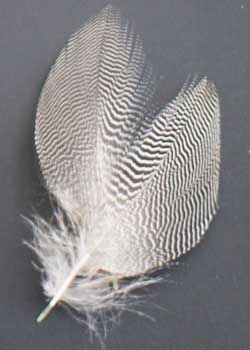
 Dyed Lady Amherst
 Gadwall Flank
Feathers for tying Spey Flies Spey fly patterns such as the Lady Caroline first developed along the River Spey. They displayed a charactor all their own. The hackling was unique, they used a spey cock side tail or a long heron hackle and the wings were tied from Mallard shoulder. Later, the Dee-style of tying combined a wing with long hook, slim body, and long heon hackles. However, it is not only the wing that set these two styles apart, the complexity of the patterns begin to move in the direction of the Victorian era Full Dressed Salmon flies.
|
|
Here you will find only the finest feathers, listed in the order - body hackle, feathers for throats, and wings.
Body Hackle | Collars and Throats | Wings
Each of these catagories has links to a "must have " list of feathers for tying most patterns. And as always, if you have any questions, please call!
|
|
Body Hackle Classic Spey dressings called for hackles from the Spey cock, whereas Dee flies were hackled with Heron feathers. A third type, Eagle flies, called for feathers from the leg of a Golden Eagle, however, today they are hackled with marabou blood quills dyed a grey-brown. |
|
Links
The feathers on these bird most closely resemble the long fibered heron feathers traditionally used to hackle spey patterns. The feathers on the rump have the longest and strongest fibers.
The pulsating movement that these feathers create in the water have made them a popular as a sub. The fibers are long and strong, dye well, and can be found in many contemperary patterns.
Chosen to imitat the soft black shoulder feathers of a heron, the ideal plume has fine stems and fibers with little to no fuzz near the tipps. These blood quills are also ideal for imitating the leg feathers of a Golden Eagle that were used for tying "Eagle flies".
|
The ideal Spey Cock feather is long, thin stemed, and has varing degrees of brownrunning in the feather. Half bronze schlappen is as close as we can come today to immitating the qualities of the rooster bred along the River Spey.
The feathers found on the lower rump of a Ring necked pheasant are heron like in a mannor of speaking, the fibers are long and free of webb. They dye nicely and are a perfect sub for tying mid sized patterns
These feathers are used to hackle heron style flies. They have been put through a slight bleech bath to burn off the barbuals or web that hold the feather together. The feathers vary a bit and the ones with the heavier stems can be split so as to tie in more easily. |
 Rhea
Rhea
|
|
Collars and Throats Classic literature refers to the flank feathers from wigeon, teal, and pintail for use tying throats and collars. Today, tyers have greatly expanded their selection of feathers as well as colors. |
|
Links
Classic literature refers to wigeon, teal and pintail. However, the flank feathers from any one of the ducks I've listed work well and add their own distinct qualities. To further expand possilbities, check out the dyed colors, and don't be afraid to ask if you don't see one you're looking for.
Often used as a natural substitute for Eropean Jay, these cobalt blue feathers are spoted with robin blue dotts. The fibers are soft and the stem on even the longer feathers is thin and flexable.
There are quite a few different feahers on this bird that are irreplacable in tying spey and dee patterns. The darker feather make the white spots come alive and are great for throats and collars. The electric-blue hackles make nice collars as well, and the long narrow neck hackles are used in tying Elver patterns. |
The vibrant spoted pattern on these feathers make a striking collar. Generally, the larger body feathers have dots that are more distinct and when wraped, create a barred pattern. The dots on the smaller feathers are more blurred. Each lends to its own effect.
The flank feathers on these birds closely resemble lemon flank on a Wood Duck. However, the fibers are much longer and for that reason are especially useful in tying collars on large Dee patterns such as the Glentana. The pattern on the shoulders is nice too! |
 Duck Flank
 Keyna Crested Guinea
 Vulurine Guinea
 Guinea
|
|
Wings Traditionally, Spey fly wings were made of two strips of bronze mallard tied in tent style. Dee flies on the other hand, were made with two slips from turkey quills. Contemperary patterns have added some new and exotic feather to the mix. |
|
Links
The largest feathers on the flank of a duck are often used as winging material. These include, Hooded Merganser, Pintail, and Green Winged teal, dyed and natural, to name just a few. Flank from exotic waterfowl also sources of interesting possibilities.
Due to it's availability and ease in dying, many tyers use these feathers rather than swan shoulder for tying in Dee-style and Spey-style wings. Goose shoulder is on the soft side and is usually seen tied in "tent-style".
Argus offer three possibilities for winging materials for Dee patterns. Wing feathers, center tail feathers, and side tails. Each have beautiful color patterns and long fibers perfect for tying in V shaped Dee wing styles. The most commonly seen are the snowflake side tails.
The wide, webby, sturdy feathers on a saltwater rooster cape are perfect for hackle tip wings on spey flies. The tips are rounded and the stem is strong so the fly hold its shape in water. These capes are dyed just about any color you could ever want! |
Historically the feather of choice, these feathers used in matched pairs and tied in a roof style. They are the outer shoulder or scapular feathers on a Mallard drake, each having only 3 pair of usable size. Be sure and check out scapular feathers from American Wigeon and Gadwall, the color patterns are interesting.
Historical Dee patterns call for feather strips cut from turkey tails tyed in so when viewed from above, they formed a V shape. Today with all the color mutations of Turkeys being bred there are lots of possibilities. Be sure and check out the dyed color sets.
Not called for that often, these tail quills from the world's largest grouse have a unique mix of irredescent black and white The fibers are long and stiff, perfect for winging materials in Dee patterns. They are used similarily to Turkey tails
|
 Argus
Argus Saltwater Rooster
Feathers for tying Classic Salmon Patterns Simple and elegant, Spey flies are a favorite among many tiers. The patterns are fun to tie, that is if you have good feathers. Here you will find only the finest feathers, listed in the order - body hackle, feathers for throats, and wings. |
|
Here are some suggestions for feathers that are used in tying Classic Salmon flies. This page is divide into the following types of trout flies. Click on one of these links:
Tailing Feathers | Body Hackle | Feathers for Throats
Winging Feathers | Cheeks & Sides
Each of these catagories has links to a "must have " list of feathers for tying most patterns. And as always, if you have any questions, please call!
Tailing Feathers Fly Fishing show season is just around the corner! As with every year, I will have the same wide selection, plenty to pick through, and off course, a few new offerings to grab your attention |
|
Links
Fly Fishing show season is just around the corner! As with every year, I will have the same wide selection, plenty to pick through, and off course, a few new offerings to grab your attention.
Fly Fishing show season is just around the corner! As with every year, I will have the same wide selection, plenty to pick through, and off course, a few new offerings to grab your attention
Fly Fishing show season is just around the corner! As with every year, I will have the same wide selection, plenty to pick through, and off course, a few new offerings to grab your attention.
|
Fly Fishing show season is just around the corner! As with every year, I will have the same wide selection, plenty to pick through, and off course, a few new offerings to grab your attention.
Fly Fishing show season is just around the corner! As with every year, I will have the same wide selection, plenty to pick through, and off course, a few new offerings to grab your attention
Fly Fishing show season is just around the corner! As with every year, I will have the same wide selection, plenty to pick through, and off course, a few new offerings to grab your attention.
|
Body Hackle Fly Fishing show season is just around the corner! As with every year, I will have the same wide selection, plenty to pick through, and off course, a few new offerings to grab your attention |
|
Links
Fly Fishing show season is just around the corner! As with every year, I will have the same wide selection, plenty to pick through, and off course, a few new offerings to grab your attention.
Fly Fishing show season is just around the corner! As with every year, I will have the same wide selection, plenty to pick through, and off course, a few new offerings to grab your attention
Fly Fishing show season is just around the corner! As with every year, I will have the same wide selection, plenty to pick through, and off course, a few new offerings to grab your attention.
|
Fly Fishing show season is just around the corner! As with every year, I will have the same wide selection, plenty to pick through, and off course, a few new offerings to grab your attention.
Fly Fishing show season is just around the corner! As with every year, I will have the same wide selection, plenty to pick through, and off course, a few new offerings to grab your attention
Fly Fishing show season is just around the corner! As with every year, I will have the same wide selection, plenty to pick through, and off course, a few new offerings to grab your attention.
|
Throats Fly Fishing show season is just around the corner! As with every year, I will have the same wide selection, plenty to pick through, and off course, a few new offerings to grab your attention |
|
Links
Fly Fishing show season is just around the corner! As with every year, I will have the same wide selection, plenty to pick through, and off course, a few new offerings to grab your attention.
Fly Fishing show season is just around the corner! As with every year, I will have the same wide selection, plenty to pick through, and off course, a few new offerings to grab your attention
Fly Fishing show season is just around the corner! As with every year, I will have the same wide selection, plenty to pick through, and off course, a few new offerings to grab your attention.
|
Fly Fishing show season is just around the corner! As with every year, I will have the same wide selection, plenty to pick through, and off course, a few new offerings to grab your attention.
Fly Fishing show season is just around the corner! As with every year, I will have the same wide selection, plenty to pick through, and off course, a few new offerings to grab your attention
Fly Fishing show season is just around the corner! As with every year, I will have the same wide selection, plenty to pick through, and off course, a few new offerings to grab your attention.
|
Winging Fly Fishing show season is just around the corner! As with every year, I will have the same wide selection, plenty to pick through, and off course, a few new offerings to grab your attention |
|
Links
Married Wings
Fly Fishing show season is just around the corner! As with every year, I will have the same wide selection, plenty to pick through, and off course, a few new offerings to grab your attention.
Fly Fishing show season is just around the corner! As with every year, I will have the same wide selection, plenty to pick through, and off course, a few new offerings to grab your attention
Fly Fishing show season is just around the corner! As with every year, I will have the same wide selection, plenty to pick through, and off course, a few new offerings to grab your attention.
Fly Fishing show season is just around the corner! As with every year, I will have the same wide selection, plenty to pick through, and off course, a few new offerings to grab your attention.
Fly Fishing show season is just around the corner! As with every year, I will have the same wide selection, plenty to pick through, and off course, a few new offerings to grab your attention.
|
Fly Fishing show season is just around the corner! As with every year, I will have the same wide selection, plenty to pick through, and off course, a few new offerings to grab your attention.
Fly Fishing show season is just around the corner! As with every year, I will have the same wide selection, plenty to pick through, and off course, a few new offerings to grab your attention
Fly Fishing show season is just around the corner! As with every year, I will have the same wide selection, plenty to pick through, and off course, a few new offerings to grab your attention.
Fly Fishing show season is just around the corner! As with every year, I will have the same wide selection, plenty to pick through, and off course, a few new offerings to grab your attention.
Fly Fishing show season is just around the corner! As with every year, I will have the same wide selection, plenty to pick through, and off course, a few new offerings to grab your attention.
|
Whole Feather Wings
Fly Fishing show season is just around the corner! As with every year, I will have the same wide selection, plenty to pick through, and off course, a few new offerings to grab your attention.
Fly Fishing show season is just around the corner! As with every year, I will have the same wide selection, plenty to pick through, and off course, a few new offerings to grab your attention
Fly Fishing show season is just around the corner! As with every year, I will have the same wide selection, plenty to pick through, and off course, a few new offerings to grab your attention.
|
Fly Fishing show season is just around the corner! As with every year, I will have the same wide selection, plenty to pick through, and off course, a few new offerings to grab your attention.
Fly Fishing show season is just around the corner! As with every year, I will have the same wide selection, plenty to pick through, and off course, a few new offerings to grab your attention
Fly Fishing show season is just around the corner! As with every year, I will have the same wide selection, plenty to pick through, and off course, a few new offerings to grab your attention.
|
Cheeks & Sides Fly Fishing show season is just around the corner! As with every year, I will have the same wide selection, plenty to pick through, and off course, a few new offerings to grab your attention |
|
Links
Fly Fishing show season is just around the corner! As with every year, I will have the same wide selection, plenty to pick through, and off course, a few new offerings to grab your attention.
Fly Fishing show season is just around the corner! As with every year, I will have the same wide selection, plenty to pick through, and off course, a few new offerings to grab your attention
Fly Fishing show season is just around the corner! As with every year, I will have the same wide selection, plenty to pick through, and off course, a few new offerings to grab your attention.
Fly Fishing show season is just around the corner! As with every year, I will have the same wide selection, plenty to pick through, and off course, a few new offerings to grab your attention
|
Fly Fishing show season is just around the corner! As with every year, I will have the same wide selection, plenty to pick through, and off course, a few new offerings to grab your attention.
Fly Fishing show season is just around the corner! As with every year, I will have the same wide selection, plenty to pick through, and off course, a few new offerings to grab your attention
Fly Fishing show season is just around the corner! As with every year, I will have the same wide selection, plenty to pick through, and off course, a few new offerings to grab your attention.
Fly Fishing show season is just around the corner! As with every year, I will have the same wide selection, plenty to pick through, and off course, a few new offerings to grab your attention
|
Horns Fly Fishing show season is just around the corner! As with every year, I will have the same wide selection, plenty to pick through, and off course, a few new offerings to grab your attention |
|
Links
Fly Fishing show season is just around the corner! As with every year, I will have the same wide selection, plenty to pick through, and off course, a few new offerings to grab your attention.
Fly Fishing show season is just around the corner! As with every year, I will have the same wide selection, plenty to pick through, and off course, a few new offerings to grab your attention
|
Fly Fishing show season is just around the corner! As with every year, I will have the same wide selection, plenty to pick through, and off course, a few new offerings to grab your attention.
Fly Fishing show season is just around the corner! As with every year, I will have the same wide selection, plenty to pick through, and off course, a few new offerings to grab your attention
|
Ordering
Thank you for visiting my site. If you'd like to place an order, the best way is to e-mail me a list. If you don't see just the exact color of something you're looking for, or you're just about out of a hard to find color, please ask. Chances are I have one and I'd be glad to email you some pictures.
Soon I hope to have a simple version of a shopping cart, but first I'd like to get most items listed on the site. I'm the only one putting orders together so if you have any special requests I'm glad to help. All orders will be shipped within 24 hours.
Thanks for visiting my site and if you have any questions please call.
David
608-332-4220
*Return Policy
If you order feathers from me and not happy for some reason, please contact me right away and I will resolve the problem. I, in no way, want you to be unhappy with anything you purchase from me.
Thanks, David 608-332-4220
Feather Lines
Five distict lines of Rooster Hackle; A dry fly line, a saltwater line, a soft hackle rooster line, and a line directly descended from birds Harry Darbee developed. The saltwater line is a larger breed of birds that has been bred to tie stealhead and streamer patterns. And last but not least, Coq de Leon, all premium Fly Fishing Feathers.
These are chicken feathers. From barnyard birds to the finest Whiting Genetic Hackle, it's all here. I've divided it into Rooster Hackle and Hen Feathers. For those just getting started, I've put together pages with lists of must have feathers.
Feathers for Trout Flies | Feathers for Bluegill, Bass, Pike, and Muskie Flies
Feathers for Spey & Dee Patterns | Feathers for Classic Salmon Flies
And for those of you who know exactly what you're looking for, this page is divided into links for rooster hackle, soft hackle hen, and exotic species - just click on any of the links!.
With so many feathers and links on this page, it's hard to know where to start. And it's easy to get lost. So to get a quick glimpse of all the pages on this site, here is a link to the Site Map. To see what's new, please see my page Just In.
Today's Hackle Growers
- Links -



Other pages on my site
-Links-
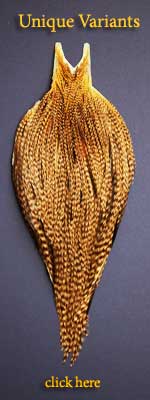
Variants
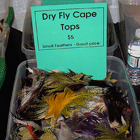
Show Day
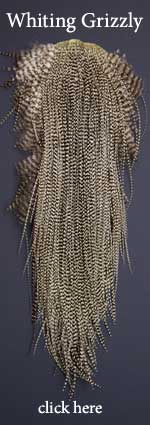
Shop everything grizzly all on one page!
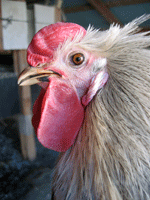
Coq de Leon
Adams dry fly

Dry Fly Capes
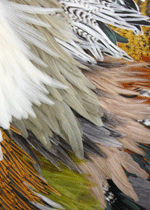
the perfect feather for saltwater and streamer patterns
Hendricksons
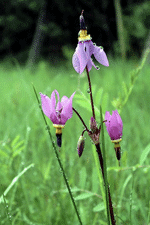
Shooting Star
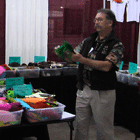
Chuck Furimski shops only the best!
Nymph
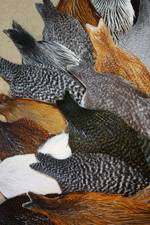
Soft Hackle Hen Capes
Caddis Fly
Shopping
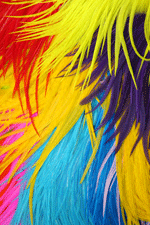
Flat Wing Fly Saddles
True Silver Pheasant
Red Grouse
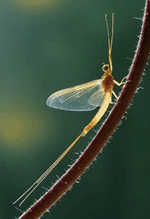
Mayfly
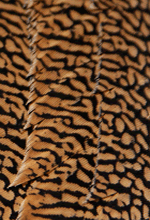
Am gold Tails
Malay Crestless Fireback
Tying in scheoppen
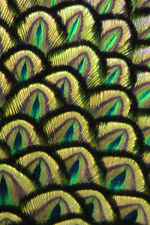
Jave Green Peacock
Tiger Heron
Ocelated Turkey
Germain's Peacock Pheasant
The fin
Saltwater Saddles
Ariel Toucan
Cotinga
White Breasted Kingfisher
Red Junglefowl
Temmink's Hen
Nymph pattern
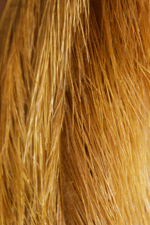
rhea - golden olive
The fin
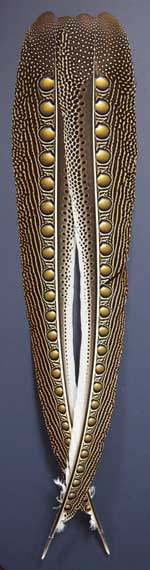
Argus Pheasant
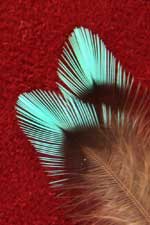
Cotinga Cayana
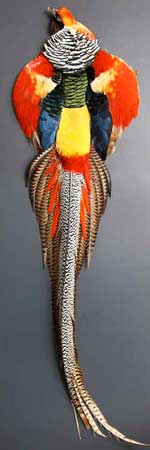
Am-Gold Pheasant
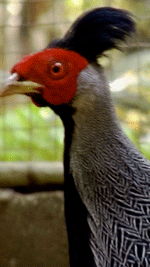
Lewis Silver Pheasant
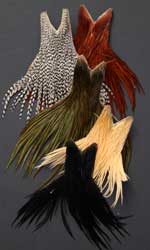
Dry Fly Cape Tops
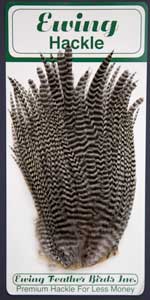
Ewing Feather Birds
Waterfowl Flank Feathers
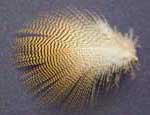
Wood Duck
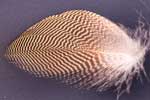
Gadwall Flank
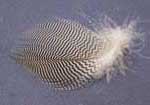
Green-wing Teal
Jave Green Peacock
Junglecock
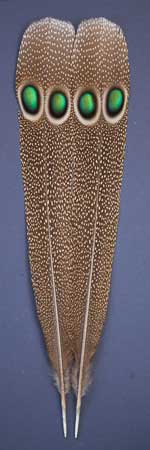
Grey Peacock Pheasant
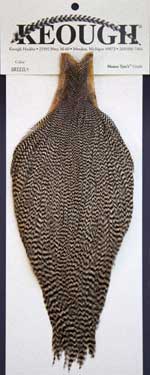
Keough Hackle
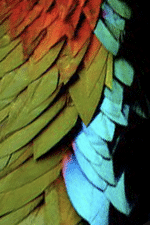
Impeyan Pheasant
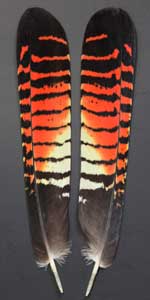
Red Tailed Black Cockatoo
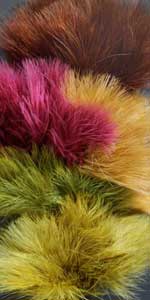
Blood Quill Marabou

Am-gold Tails
Streamer Shoulder Feathers
Silver Pheasant
Junglecock Nails
Pearl Guinea
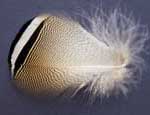
Barred Wood Duck
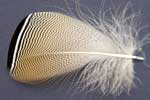
Barred Mandarin
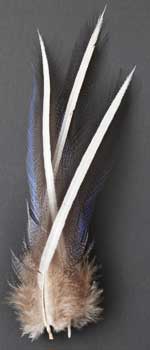
Vulturine Guinea
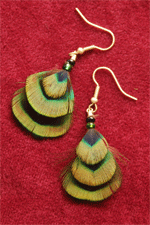
Java Green Peacock
Site Map - Pages
Just getting started and looking for a suggestion or two? Check out our "suggestion pages".
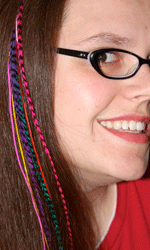
Hair Feathers
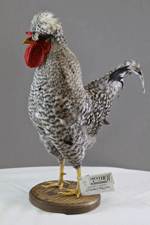
Mounted Birds
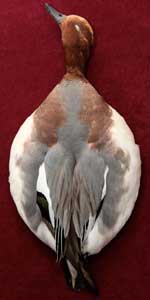
Full Skins
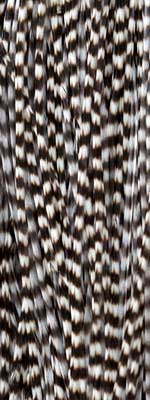
100 Packs - grizzly midge
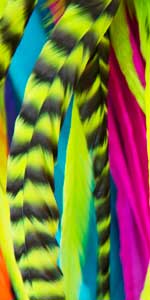
Whiting Schlappen
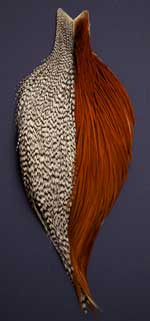
Gift Shop - some great ideas for the hard to shop for person on your list!

cree hackle - the ultimte variant
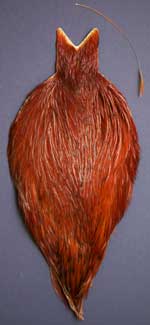
Rhode Island Red Capes
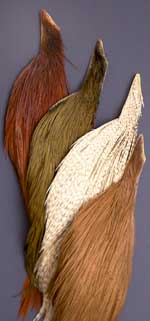
Whiting Dry Fly 1/2 Capes - More colors for less money!
Argus Pheasant
Cotinga Cayana
Am-Gold Pheasant
Lewis Silver Pheasant
Dry Fly Cape Tops
Ewing Feather Birds
Waterfowl Flank Feathers
Wood Duck
Gadwall Flank
Green-wing Teal
Jave Green Peacock
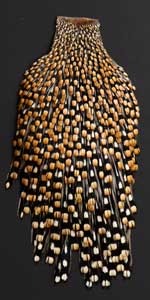
Junglecock
Grey Peacock Pheasant
Keough Hackle
Impeyan Pheasant
Red Tailed Black Cockatoo
Blood Quill Marabou
Am-gold Tails
Streamer Shoulder Feathers
Silver Pheasant
Junglecock Nails
Pearl Guinea
Barred Wood Duck
Barred Mandarin
Vulturine Guinea
Java Green Peacock
Site Map - Pages
Just getting started and looking for a suggestion or two? Check out our "suggestion pages".
Hair Feathers
Mounted Birds
Full Skins
100 Packs - grizzly midge
Whiting Schlappen
Gift Shop - some great ideas for the hard to shop for person on your list!
cree hackle - the ultimte variant
Rhode Island Red Capes
Whiting Dry Fly 1/2 Capes - More colors for less money!